Translate

Showing posts with label overlanding. Show all posts

Sunday, 8 October 2017

Cleaning up the outback & making money.

We recently did a little bit to help cleanup Australia's outback which also put some cash in our pockets and gave us exercise too. So, a triple Win!

I regularly go for a morning walk and as I do I pick up some rubbish and dispose of it responsibly. Fortunately, in most parts of Australia I just get to pick up a couple of items    Unfortunately in Cape York Peninsula I started walking with a bag to carry more, and this continued into Queensland Gulf Savannah region. And then, we got to the Northern Territory (NT). Read on!

We hadn't long been in the Northern Territory (near Borroloola infact) when I realised how much 'gold' was lying around. By this I mean empty cans from a popular beer: XXXX Gold (pronounced: 'Four X gold'). 

The NT has a 'container deposit scheme' where if you return (most) drink containers you get 10c each for them. Glass bottles, plastic bottles, aluminium cans, juice and flavoured milk cartons have this refund scheme. If you look at the side of the containers it should tell you if the refund applies. 

So, I went picking up rubbish, and Hendrik soon joined me (and ended up doing far more than me). We didn't just pick up the refundable items but picked up other rubbish too in a bid to clean up the countryside. Most the discarded litter was refundable, so it seemed only fair to pick up the little bit of other stuff too. 

After the first morning I learnt to carry more bags.
After the first collection I learnt to start carrying more bags. 

A website https://ntepa.nt.gov.au/container-deposits/collection-depots tells you where the collection points are and a few of the rules. And I want to say that although each depot has final say on what they'll accept we found the depots we went to to be very lenient. But do have your recyclables sorted: plastic bottles separate to glass (for which a milk crate is best) and aluminium separate too. The depots prefer cans uncrushed (it helps their machines) but we picked up squashed cans too (and shook the dirt off and out of them) and had them accepted. It's at the depots discretion. 

We actually returned collections to a depot 4 times and made $180 ($AU180 = $US135 = €120, all approximate). With our combined hours considered I recon we made about $15 per hour. A 'real' job might pay us more, but we still reckon this is good money. 

Sometimes we'd park Blu and I'd go one direction along the road and H in the other. After an agreed time (like 15 minutes) we'd cross the road and turn back. Some areas are particularly good. Start doing this and you too will start to see the 'Gold' everywhere!

Sunday, 30 April 2017

Fraser Island and Lady Elliot Island too!

Fraser Island is the largest sand island in the world and a treat to visit with long drivable beaches, pristine lakes, crystal clear creeks, rainforest, sandblows and even a shipwreck. Thus, it's one of Australia's top tourist destinations. 

When a European friend wrote to me and said that she planned to visit Queensland I asked what she wanted to see, and she said Fraser Island. First I recommended tours to her... 2-3 days. But then I decided it might be a good chance for H and I to visit Fraser Island too. I had been there a couple of times in my life but H was also wanting to explore it. 

So it was decided we'd go to Fraser Island with her, and invite a Brisbane based friend along too. 

Fraser Island, being of sand, is for high clearance 4wd vehicles only. So taking Blu wasn't an option. Fortunately my brother was able to lend us his '6 wheeler 4wd Mazda BT50'. I didn't want to drive but H did, so it was settled that on the island he'd do all the driving. However, I was a little nervous, H doesn't have a lot of experience driving a Six wheeler or driving in Fraser-like conditions (the beach is easy, getting on and off the beach is usually most troublesome, and inland tracks can be harsh), but we never got stuck!
The 6 wheeler 4wd Mazda BT50 we took to Fraser Island. For more info: www.sixwheeler.com.au 

The 6 wheeler 4wd Mazda BT50 we took to Fraser Island. For more info: www.sixwheeler.com.au


We spent 4 nights on the island: 2 on the beach with the first and last nights at Central Station. It rained our first nights there which made it quite miserable and although beach camping is a great Fraser Island experience we all preferred the camp at Central Station. 

We drove North as far as Orchard Beach, visiting Eli creek, Maheno shipwreck, Indian head and the Champagne pools. And while we camped on the beach some Dingoes (Australias wild dog) stopped by to see if anything was on offer (it wasn't). 

The view from Indian Head, Fraser Island.  

The view from Indian Head, Fraser Island. 


Maheno shipwreck, Fraser Island  

Maheno shipwreck, Fraser Island 


Fraser Island is a wonderful destination to visit but I think you're better off doing a tour and letting someone else clean up. Camping on sand in rain isn't much fun. 

Prior to Fraser Island we did a few other things with our friends. 

Due to cyclone Debbie hitting the North coast of Queensland it was a rather rainy at the start of my friends stay in Queensland. So we first went inland to try and avoid the wet coastal weather. 

We visited the Bunya Mountains, it's not far from where I grew up and is a great place for seeing wild wallabies and parrots. I've taken many international visitors there over the years and the young joeys in their mothers (wallabies) pouches is a typical treat that visitors delight in. 

We also visited the Dalby Cattle Sales (which is the largest same-day prime and store cattle sale in the country), and an elderly friend kindly explained the goings on to us all. 

On the way to the coast we also visited an interesting museum at Cherbourg: The Ration Shed. Cherbourg was one of the places in Australia that Aboriginal people were taken to/ accommodated at when they were removed from their tribal lands and this museum is about the facility there. It's interesting, it's a sad part of Australia's history and worth a visit, but I think some of it needs to be put into comparible context of of times that it happened in. 

In Hervey Bay we went out for dinner and I had the best meal I'd had in a long time. Thank you to The Vinyard, that Chowder was superb and H's Moreton Bay bugs looked great too. Two days latter, before crossing to Fraser Island, we bought a feed of (cooked) prawns and bugs and ate them in the park. People rate eating like this expensive but it's actually less expensive than getting take-away,  delicious and healthier, and the girlfriends enjoyed it. 

We also went to Lady Elliot Island on a day trip. To get to Lady Elliot Island they fly you out and back and so it's not the cheapest Great Barrier Reef island experience. But, for a long time I had thought that if you were willing to spend the money it might be the best GBR experience available. So, we did it!

We were not disappointed, in fact we loved it! On the flight out we saw Fraser Island from the air, and, of course, Lady Elliot Island too. We did the glass bottom boat trip and ate the wonderful lunch, but best of all was the snorkelling. I just kick along the surface in wonderment of all the things I can see. H is an amazing free diver (well I think so) and so he keeps going down for a closer look. Not that closer looks we're needed - the visibility was amazing. 

We saw many turtles (loggerhead and green sea), sting rays, and so many fish of different types and colours and corals too. H saw an octopus too. 

Green Sea turtle, Lady Elliot Island.  

Green Sea turtle, Lady Elliot Island. (Note H snapped this photo with an iPhone 5S with a cheap underwater case from eBay. Pretty good, heh?)


Lady Elliot is a splurge, but we want to go back one day. Maybe even to stay overnight, and next time in Manta Ray season. 

We hope that the girls loved this trip. We visited islands, mountains, some rural culture and aboriginal history. 

Saturday, 9 April 2016

Building our new Motorhome

Since we've been back in Australia I haven't been blogging. I have chosen to only blog about overlanding, and not about anything that isn't relevant to (our) world travel in a motorhome.

At the moment, we are working on building our new motorhome. For this we bought an old Mercedes "denning" school bus and we are converting it. H hopes to have the task completed in July of this year.

As I don't have much to comment on I am simply posting some photos on our Facebook page "The Belgian and The Aussie" to show those interested our progress.
https://www.facebook.com/thebelgianandtheaussie/
Here's the bus that we are converting to a motorhome.

When the conversion is ready I intend to post a full blog about our building the motorhome.

Monday, 18 January 2016

Cooking in the Omnia Oven

A few people have asked me to write about, and show,  what I have cooked in my Omnia Oven. Unfortunately, I won't be doing much showing as H and I have usually consumed the product before I think about taking a photo.

My first creations were cakes. I based my cakes on my mothers old recipe (she calls it 2-4-6-8 cake*): 
3/4 cup of sugar creamed with 250g butter, add 2 eggs and 2 cups self raising flour and enough milk to make it look right (1 cup). I vary this recipe to get different flavours: Vanilla, Orange, Chocolate. 
Later, in Greece (where the olive oil was plentiful and delicious), I replaced the butter with 1/2 cup of olive oil, and the milk with orange juice, added some orange peel, and I had another yummy cake. Each cake took about 25mins to cook. 
(*2-4-6-8 because it's old fashioned: 2 eggs, 4oz butter, 6oz sugar, 8oz SR flour, 1 cup milk, dash of vanilla and a pinch of salt).

Omnia's suggestion of dusting the tin with breadcrumbs to prevent sticking works brilliantly well for basic baking (like above). But I struck trouble with my first 'upside down pineapple cake' - the pineapple stuck in the pan. I achieved desirable results on my second attempt by lining the bottom of the pan (just the ring) with baking paper. Pineapple upside-down cake is a new experience for the Belgian and he was soon asking for more. I use the basic 2-4-6-8 recipe, but first put pineapple pieces (cut rings) in the pan.

Pineapple upside-down cake baked in Omnia stove top oven.
Roasting cuts of meat and vegetables has also worked really well. My first roast was lamb. I actually bought lamb chops and put vegetables in the pan first, chops on top and let it roast that way. My result was delicious, although the Omnia rack (now available) will be a useful addition to let fats drain off.
We also bought a whole chicken, dissected it into pieces and cooked the chicken pieces in the Omnia oven. I wanted the fat to drain off, but didn't yet have the rack so I put some unwanted broccoli stalks in the bottom of the pan and threw them out later. In Australia I should have a rack... but I can say that the Omnia is great without it, maybe better with.

In the future I plan to make pasta bakes, meatloaf, vegetable gratins, and more. But now my Omnia oven is packed to be part of the next motorhome, in Australia.

Greece to Italy by Ferry

Once we got the news that it was time to go to Australia, it also meant that we had to get ourselves and Blac back to Belgium ASAP. First though, we had visitors (in Greece) until New Years Day, so we'd had to leave as soon as they had gone.

To facilitate a speedy return across Europe we booked a ferry ride from Patras (Greece) to Venice (Italy). This ferry trip was scheduled to take 31 hours, and saved us a bit over 1300kms of driving (by my calculations), and many border crossings (through Macedonia and Serbia, which isn't like crossing Schengen borders). The drive, from Athens to Patras plus Venice to Belgium, was approximately 1400kms.

If you take one of these ferries with your motorhome in summer they allow you to 'camp onboard' ie, you can sleep in your own motorhome. Unfortunately this isn't allowed in winter, and tickets weren't cheap so we bought the cheapest ones available: deck.

I searched online but I couldn't get much idea of what to expect with sleeping in 'deck' class. I knew we should take blankets and cushions, and that best sleeping places for deck customers are typically quickly snapped up.  I was a little worried that we'd have 2 sleepless nights. However, when we boarded I was pleasantly surprised by the quality of the seats for sleeping. There was even room to stretch out, bench seats. And, in low season everyone gets an okay spot to kip.

We also took 'picnic' food onboard, which saved us buying quite so much food at the cafe.

For anyone else wondering what deck sleeping on an Anek - Superfast Ferry is like, here's a picture from our ferry.


Sleeping on the Deck of an Anek - Superfast Ferry.
Our journey from Venice to Belgium took us through Austria,
which we needed to do before there was much more snow.

Friday, 1 January 2016

Overlanding Greece: Nafplio

After Christmas H's brother and his partner flew down to join us. They stayed in a cute hotel and we stayed in the port parking area.

The area of Nafplio is popular with Overlanders and motorhomes wintering in Greece. As I mentioned we stayed in town on the port parking as did many other motorhomes, others stayed (also free parked) on the beach 5 km away, and some paid to be in a campsite (showers, toilets, dumps, wifi) 10km away (at Drepano). On one occasion I counted 22 motorhomes on the free beach place. 

Nafplio is a nice place for typical touristy things: sightseeing, shopping and dining out. We even hired a car for a day to visit the archaeological site of Epidaurus and wineries. 

For the most part we had wonderful weather, but one day was horribly cold. 

The Aussie likes some time to herself, so she found cycling and walking Nafplios coastal walk a nice little escape. 

Climbing the 999 steps to Palamidi fortress is a tough challenge but worth it for the view! And the fortress is a great place to explore too. 

The streets of Nafplio had rustic sights to find whilst getting lost in the little alleyways. 

Wednesday, 30 December 2015

An oven for travel

I'm not sure if this was a Christmas present for me or for H. I've been wanting an oven in Blac, mostly to make cakes in, and H likes it when I bake cakes. Finally we have the solution.

We'd looked at plenty of other oven options but only recently did I discover the 'Omnia'. I saw it at Zampetas camper stop in Thessaloniki (Greece), and then I went and looked for some reviews online. The reviews were great, and so we went back in and bought one. 

This oven does cakes and breads wonderfully. I also roasted lamb and potatoes in it, and it did that really well too. I do want a couple of accessories that I can now see online, and then it'll be perfect. 

Today we have a visitor celebrating a birthday. So he got a special cake. 

It seems that the Omnia isn't yet sold in Australia, so when I take this one to Australia maybe it'll be the first Omnia there.

Friday, 18 December 2015

Overlanding Greece: Mani Peninsula (Peloponnese)

Wow. The Mani Peninsula of Greeces Peloponnese is so spectacular that it makes one wish that lifestyle would never  NEVER end. And it impresses me that H and I can still be so gobsmacked by the beauty of a place after seeing so much of the world. Yes, the world is a truly marvelous place!

Here's photos. What more can I say?

The only thing detracting from this view of Limeni is that swimming pool.... the sea looks more inviting anyway!

A little church at Nomitsis, that's H at the door!

Inside the Nomitsis Church (Greek Orthodox) which is clearly used regularly. H didn't come in. 

Mani peninsula is known for its old towers, which were formally occupied by feuding clans. This is Vatheia. 

At the end of the peninsula there's a hike to a lighthouse and some say the end here is one of the entrances to Hades (the underworld of Greek mythology). 

And finally this little plant was frequent on the hike. I guess it's a pitcher plant of sorts, but I like the way it poses like a striking cobra. 


Monday, 14 December 2015

Overlanding Greece: Messinia of the Peloponnese

We've all heard of Kalamata olives, so it's no surprise that the Kalamata region, Messinia, of Greece, is an area full of olive trees. 

This region provided us the opportunity to visit the spectacular archaeological ruins of Messene. I hadn't heard of these before researching Greece, they aren't much visited as they're a bit off the beaten track, but they are well worth the visit. They've impressed me more than any of the other Greek sites. 

The Messene ruin site is big, even before reaching the fenced off site the road led Blac through the monumental west gate of the city, known as the Arcadian Gate!

See Blac? The road goes right through the ruins of Arcadia Gate, Messene. 

Within the site you walk among interesting ruins each part seeming better than the last, until you get to the ancient stadium and gymnasium, at which I exclaimed "oh, that's beautiful!, it's just amazing!".

None of our photos do justice to the Messene Archaeological site, you should visit. 

After visiting Ancient Messene we had a few hours wait as I'd made arrangements to visit an active modern olive (oil) mill. If you want to visit an olive mill you should come in the right season and make arrangements to visit. We visited Andelea-Benakopoulis Olive Mill (www.andela.gr or search on Trip Advisor too). Now is a great time to visit and, as they are busy picking the olives during the day, they are doing the milling by evening. 

At the mill the Production manager, Pavlo, was kind enough to explain how it works and let us taste some olive oil. This olive oil was extracted from olives that were picked that day and processed right in front of us. The fresh product is very green and rather (unexpectedly) spicy. And, absolutely delicious!


The day had a final unexpected delight. We left the mill in the dark, and usually we don't drive at night but we needed to find a pamp place. As we drove up into the countryside we spotted a pine martin. So cute! Until a few days ago I hadn't even heard of one of these but I'm reading 'Captain Corelli's Mandolin' (Louis de Bernieres) which is set on a Greek island near to this part of Greece, and the book features a pine martin (which I had to look up online). 

What a great day!

Final note for fellow travellers: we were also advised by a few people that one should also visit the Ancient archaeological site of Bassae. Unfortunately, it's opening hours are now just Monday to Friday (closing at 3pm), and we tried to visit on Saturday. If your timing is better than hours than try to do it between Messene and Olympia. 


Wednesday, 18 November 2015

Overlanding Greece: Northern Greece & Corfu

Our first stop in Greece was up in the mountains at a lovely place called Vikos Gorge. It is a spectacular gorge but also for the scenery on the drive to the gorge. My image of Greece before coming had mostly been about islands and ruins, so this was a different start.

The next day we were off to the Greek island of Corfu (which is so far north it sits more in front of Albania than Greece). We happened to catch the ferry across to South Corfu, which was a good choice as it's less expensive and meant it was easier to find a quite beachside location nearby to camp the night (if we'd taken the Kerkira (Corfu city) ferry we'd have arrived in a very developed part of Corfu).

Our information told us that all campsites on Corfu are closed in November, so we wildcamped (pamped) in 4 different locations for the 4 nights we were there. 

We saw a lot of Corfu during our stay. We really liked seeing the really old olive groves, and, of course, Corfu has some stunning beaches. It's off season for tourism so some tourist towns were pretty much ghost towns. But, travelling in other parts of Corfu people gave us friendly waves as we passed through. 

Gnarly old olive trees on Corfu. 

We saw a couple of these utes on Corfu. 

My favourite find on Corfu: Palaiokastritsa. Isn't it stunning!

Overlanders notes:
The South Corfu ferry is less expensive. 
In the city you can park around the green that's between the waterfront fortress and the city centre. We paid €3 for all day. 
Tap water is available at gas stations on the island, but we found it slightly salty. Fill up your tanks before you get there. We noted that at supermarkets everyone seemed to buy bottled water. 

Tuesday, 10 November 2015

Overlanding Albania

We really liked travelling in Albania. Sure, they need to pick up their rubbish, but that aside the people are friendly and there's some great stuff to see. 

The first thing we noticed when we crossed the border from Montenegro was all the Mercedes vehicles. We think every second vehicle in Albania is a Mercedes: cars, trucks, vans, new and old. 

The next thing we noticed was that they have so many Gas stations, most without customers. Although many things in Albania are cheap (compared to other parts of Europe) the fuel is not. But then we heard that the fuel stations aren't so interested in selling fuel, and that many will sell dodgy fuel. We were told that the
fuel stations main business was generally money laundering. 

Albania drivers are crazy! Simetimes traffic on roundabouts gives way to traffic coming into the roundabout (and this obviously creates problems). They overtake on double lines, and others are willing to risk death to maintain their right-of-way. We had been pre-warned about Albanian drivers, but I guess sometimes you have to see it to believe it. 

In towns across Albania there are lots of cafes and in them men sit drinking coffee, All day! You'll never see a woman in these places unless she's serving or she's a tourist (I had too, I needed a toilet excuse!). Likewise the beer seems only to be served to tourists. 

Albania is a mix of Christians and Muslims all getting along nicely. On 2 occasions Albanians told me how tolerant they are and that intermarriage was more and more acceptable. Nice! If only the world could be like this!

Campsite owners were also friendly and 4 campsites were spotless. We stayed at 5 campsites in Albania (10 nights total, with a couple of free/wild camps too) and one brought us fruit each day (fresh from their trees), another brought us morning coffee and sat down for a chat, and another gave flowers and herbs from the garden. Each of these campsite owners was open for conversation, and it was so nice to have that personal touch. 

Albania has a bad reputation and so it doesn't get as many visitors as other countries on the Mediterranean coast. But we had no problems, nor did we feel threatened at any time. Albanians were completely friendly. Even shepherds (yes, they still have shepherds!) passing us (when we hiked) would greet us warmly and try to converse with us. 

Nobody mentions it, but the Albanian coast is lovely. This is South of Vlore. 

Overlanders note: 
fuel in Albania is expensive, it's less expensive (and possibly more reliable) in Montenegro and in Greece).
Groceries, especially fresh produce, are cheap. Don't expect big supermarkets, you won't get variety like you're used to. 
Pizza cafes are cheap, and good. 
We arrived middle of the day to GjirokastĂ«r but we couldn't find a suitable place to park Blac. So, we didn't 'visit'.... We didn't trust leaving Blac in unguarded parking and there doesn't seem to be a camping place in GjirokastĂ«r. 
We did Lake Komani from Koman on a tour. It was okay but not as spectacular as I'd read. The people raving about Lake Komani seem to have taken the ferry. The vehicle ferry is operating again, but only with sufficient clientele (which means less often at this time of year), so we couldn't do it. The passenger ferry runs daily from the other end, Fierze, at about 6am then returns from Koman at 9am. That didn't suit us, so we did a tour that was already running for other customers. If we had our time over, I'd suggest driving to Fierze instead of Komani. Maybe the vehicle ferry would be operating, and if not the passenger ferry would then be an option. 

H set this photo up, but, regardless of the staging, the Albanian wine, sold in a plastic soft drink bottle, is very good.... 1.5 litres was 350lek, about €2.50. 

Sunday, 8 November 2015

Figs and Olives on the Adriatic coast.

All the Adriatic coastline has figs and olives, more figs in the north, more olives in the south. The fig trees are just coming up wild in most parts of Croatia. We missed fig season by a month but at one campsite in Croatia the people were making fig alcohol. They'd mixed the figs, water and sugar a month earlier and left it to ferment. And as we were leaving the camp they were about to distill it in the big copper thing shown here. 

They said Croatia is on path to join the EU, and they worried that with this they'd lose the liberty to make their own alcohol. 

Some touristy places did still have fresh figs for sale, but mostly we've enjoyed the dried figs.

Olives are being harvested now. In Croatia and Albania they were individually raking each tree to harvest the olives. But here in Greece (more precisely, the island of Corfu, where the trees are old and gnarly) the trees are much bigger and they are simply laying out gauze under the trees and letting the olives fall off onto the gauze for easy collection. 

I've read that they grow pistachios further south in Greece. We don't know anything about Pistachios, so we hope to learn and eat plenty!
Like us on Facebook: The Belgian and the Aussie. 

Friday, 6 November 2015

Overlanding Montenegro

When I planned our visit to Montenegro I really thought it would take almost a week to visit. So, how was it that after just 3 days we'd already 'done' our 2015* trip to Montenegro? 

Well, when we drove in from the Dubronik end of Croatia, we expected to find some nice places, but we found that part to be overdeveloped and we just couldn't find anywhere to stop. Not even a lookout stop. So we kept driving. 

Things improved after Bijela. Then there seemed to be less development, more open spaces, and lookout points. But still we didn't make our overnight stop until we reached Kotor. Although the 'camper place' in Kotor is just a rough parking lot with a guard (until 10pm), we found it to be a good place to stop for the night. Kotor is a spectacular town and if you stay overnight you can explore it in the evening and early morning, and thus avoid the cruise ships (2 arrived on the October morning we were there). 

The next day we travelled up the mountain behind Kotor: the black mountain, 'Montenegro' (it's a translation). It was a spectacular drive with stunning views of the bay of Kotor, and then the mountains themselves in splendid Autumn colour. 

Although the friendly National Park guy told us we could stay overnight in the park, H wanted to go back to the warmth of sea level. So, we went back to the coast. This part of the Adriatic coast is lovely, but we still didn't find a place to stop overnight, so we continued. 

We were headed to Lake Skadar, and we pamped roadside at a lookout point high above the lake. 

The next morning we headed to Virpazar as I'd read that the drive on the southern side of the lake is quite stunning. But, on arrival in Virpazar we discovered that they were rebuilding the bridge and the temporary bridge had a height restriction of 2.1 metres. So, we couldn't do it! (Later we met other travellers in a VW Combi, they said it was spectacular, oh well). 
So, not being able to cross the bridge I decided we should do a boat trip. That was disappointing... Maybe it's better at other times of the year. 

Then we passed Podgorica (Montenegro's capital) and left Montenegro for Albania. 

2 nights, 3 days in Montenegro. It should have been more, oh well. 

*obviously there's more that can be visited. 
Tight alleys in Kotor. 

Up the to Lovćen National Park. 

Montenegro's Lovćen National Park. 


Saturday, 31 October 2015

Overlanding Croatia: Dubrovnik

Dubrovnik is Croatia's most famous destination, and it certainly should be visited if you're in the area.

By coming from Bosnia and Hercegovina we approached this part of the Croatian coast from the hinterland which was quite spectacular. We camped in paid camping at Mlini and took the bus to Dubrovnik. We'd recommend staying, as we did, on the coast and taking the bus or boat into the old city (the boat was unavailable during our visit). 

Dubrovnik through a window in the wall.

Dubrovnik from the wall.


Thursday, 29 October 2015

Overlanding Bosnia and Hercegovina (a bit of)

Mainland Croatia is split into two parts and to get from the northern section to the southern bit, you drive through the land known as 'Bosnia and Hercegovina', or BiH (for short). So, we decided to go and see a bit while we were there.

Our primary destination was to see the famous (and UNESCO listed) bridge at Mostar. Lucky there are a few other nearby attractions too, and although we only spent a bit more than 24 hours in BiH we do feel as though we've experienced a bit of it. 

We visited the stunning castle town of PoÄŤitelj, saw the incredible river coming from under the cliff face of Blagaj, stayed overnight in Mostar, and the next day walked Stolac to see the war damage and then followed the agricultural farming valley of the Trebišnjica River on our way back to Croatias southern piece. It was a great excursion. 

Mostar is famous for its Stari Most bridge which was destroyed in the 1990's but since reconstructed. It's a very touristy place with all the same kind of souvenirs you might expect in Turkey. I preferred each of the other places we visited but Stari Most is considered to be a must see!

Tips for others: for a little excursion like this into BiH you don't need the local currency, they'll take Euros or Croatian Kunas for entry fees, parking fees, drinks, meals, souvenirs. The fuel price is better than Croatia and you can put that on credit card. BiH will check your cars green card insurance at the border. 
View of PoÄŤitelj


Mostar's Stari Most bridge in BiH. 


Monday, 26 October 2015

Motorhome renovation: Blac's new roof hatch

Before we left Belgium again on this latest trip H gave Blac a slight renovation in the form of a new roof hatch. 

Every time someone looked inside Blac they said how much they liked our twin perplex double pane windows above the bed. They opened up for air or to crawl onto the roof, but I didn't love them. 

Honestly, you could stargaze from bed, but you usually didn't. If the weather was good and you weren't tired, you'd usually stay outside to stargaze. 
Also, the framing from the windows protruded into the bed space. 
And then, they developed leaks. H fixed these leaks, which were always difficult to trace, so many times. And then the leak would be there again, or another would be. 

So, H decided to replace the windows with a singular roof hatch made of the same recycled highway sign material that the sides and roof of Blac are made of. It hinges on one big piano hinge, and has struts to help it lift up and come back down with ease. 

We like it much better. No more leaks with this design and more space. In time we'll make mosquitoes screens to fit, but we aren't expecting to need them this winter. 

This shows Blac's new roof hatch before H painted it.
 
From above you can see that the new roof hatch is now painted to match Blac. This picture is from Lovćen National Park, Montenegro. 

Friday, 23 October 2015

Overlanding Croatia: Coastal North

Croatia has one of the most stunning coastlines I've ever seen, and the road that follows it is easy travelling. 

We've been taking our time, mostly because the weather has been bad and so we've spent time 'waiting it out'. Obviously, the spectacular Croatian coastline can be better appreciated when the sea sparkles and a blue sky is above. And we've got time.  

I have already written about some gale forced blustery winds that we experienced south of Rijeka. This area regularly has bad winds, called Bora (bura in Croatian), as evidenced by many road signs that warned caution, but we seemed to have a extra treat. This was evidenced by a BBC weather report showing a storm right where we were, the number of times the locals came to check (and bale out, during lulls) their small boats over that night (we street camped in view of a small boat harbour), and that, when we took refuge in a campsite the next day (it was still blowing) the owner later came to tell us it would be over by noon the next day. 

Aside from that storm, the Croatian weather has been pretty much the regular gusty bora plus 2 days of rain followed by a day of fine weather, again and again. Even when I could check the weather and decided we'd go hiking in the stunning Paklenica National Park we spent time sheltered under a rock overhang to keep dry after about 4kms of hiking (we hiked from town into the park). 

Rain is normal for Autumn here. We had just hoped that it wouldn't rain this much. It's also meant that much of the hiking and the boat excursion of Krka National Park weren't available and instead of the pretty cascades we'd seen photos of we witnessed thrilling flooding and thunderous movement of water. 

So far as being Overlanders, the roads have been good and we've had a fairly even mix of free pamping and paid campsites. We've found free places with stunning views on canyons, on beaches, in small town harbours, and in the city of Zadar (free parking from Saturday afternoon and all Sunday in the city centre!, and I personally think the Sea Organ is kind of trippy!). While waiting out the bad weather we've chosen paid 
'autocamps' for electricity and wifi access. 

Also, worth mentioning for other 'motorhome travellers', parking for Motorhomes in Croatian cities is often 5 times the price of regular cars yet we only take a regular car space!). It takes away from our experience and makes us rush instead of visiting extra things/stopping for coffee/ shopping. So, next to the city of Split we visited the impressive 'Solin' archeological site. And then we left Blac there (free parking), and took the bus into the Split centre and back. Bus number 1 (there and back) cost about as much as 2 hours parking and we didn't need to watch the clock. 

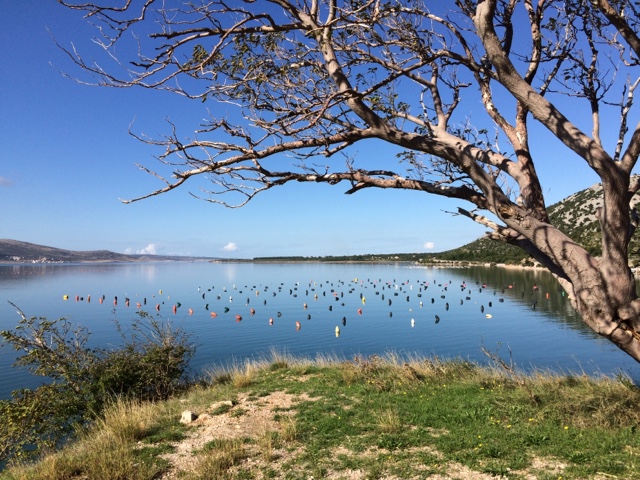
We think these are mussel farms. But we haven't been able to ask anyone. There's lots of them. 

We visited the city of Split in the rain, it's a stunning city, although wandering round with an umbrella does detract from the experience. 

The Croatian coast, south of Split. 

Monday, 19 October 2015

Camping, Parking, Pamping

Some time ago I created a word: pamping. It's because as Overlanders we usually don't camp places. Instead we park and stay inside the vehicle. I call it pamping. We pamp. 

But, really, what's the difference between camping and parking? Is there a difference officially? Yes there is. 

A car park sign in Italy explained the difference (you could park there overnight, but not camp). 

To be parking (versus camping):

Nothing must extend from your vehicle: (no awnings extended, no windows popped out.)

Nothing other than your vehicle wheels must touch the ground. (No stabiliser legs, no steps on the ground) 

You must not discard wastewater onto the parking area (standard rule at many camping areas too) 

So, we typically park. Unless there is a sign specifically saying 'no motorhomes' parking (or pamping) doesn't seem to be a problem. 
Just avoid places with lots of broken glass. 

Sunday, 11 October 2015

Blustery night on the Croation Coast

It's been a terrible night to be in a motorhome! All night long it's been blowing gusts of (I reckon they qualify) gale-forced winds. We had this weather for the last few hours of driving yesterday and it's was too much so, when we saw a supermarket we pulled into a street behind it.

As I write (Croatian coast, South off Rijeka) this it's still gusting, although I hope it's subsiding a bit. Neither of us have had much sleep, with the noise  and the vehicle rocking violently as if we got caught in a riot with trouble-making youths trying to overturn Blac. 

Although scary to be in it, it was exciting at one point yesterday: the wind was lifting great amounts of seawater like in those popular photos of lighthouses in stormy seas. At one point the sea water was even thrown on us as we drove along the road, like someone had taken a bucket of water and thrown it in Blac's face (with H and I in the drivers and passengers seats, saved by the windscreen!)

I'd love to know how long this will last, but without Internet (I'll upload this when I do) I guess time will tell. 

Overlanding Slovenia (the less touristic side)

In July of this year we popped over the popular tourist part of Slovenia. This time we came from the North into Ptuj, continued South and then west. 

We really like Slovenia. 
In Ptuj we were the only tourists visiting the museum (we wanted to see the carnival costumes and musical instrument collection, and it was very good.)

We were lucky to approach the enormous Pleterje Monastery from above (a road on a hill that is), which allowed us to see its size. At the monastery one can only visit the simple church (but I prefer churches to be simple) and it was made all the more memorable because, as we sat in the church, we could hear the monks singing. 
Imagine sitting in this church and hearing monks singing together behind the wall. 

Next door to the monastery is the 'Pleterje Open-Air Museum'. Here we were again the only tourists and so had a wonderful guided tour and learnt so much about a Slovenian way of life from years past. 
One of a few styles of Slovenian hay-rack. Hay or corn is dried on the rack part, equipment stored underneath, and in days past the family's boys would sleep up top instead of in the cottage. 

Then we followed the Krka River: beautiful historic towns, and many castles, and lot of hay racks. 
Many old hay racks on farms are still being maintained and used. 

After doing all these things quite alone, we then found the bus loads of tourists at 'Postojna Cave'. These caves are wonderful, and big, and they handled their thousands of visitors very well and deserve all those tourists. 

And then we checked out the castle built into the mouth of a cavern, 'Predjama Castle' (we just drove up and looked at the outside, but we're glad we did).
I bet some of the rooms of Predjama Castle are really dark. 

Then, keeping our Slovenian touring even more varied we visited the oldest planned breeding stud farm in the world: for Lipizzaner horses at Lipica. 
The horse stud, visited on a guided tour, is lovely. With limited blood lines breeding is strictly controlled. Each stable tells the horses birth date, it's name, and from which horses it was bred. 

At finally, we visited the historic salt pans  (some still in use) on the Slovenia-Croatia Coast. 
The salt mines are very interesting and have an appeal in an industrial-artist sense. Unfortunately we were there on a grey day. 

Slovenia is certainly an impressive country, but, the part where the monastery is can get to -15 degrees Celsius- that's way too cold for us!